
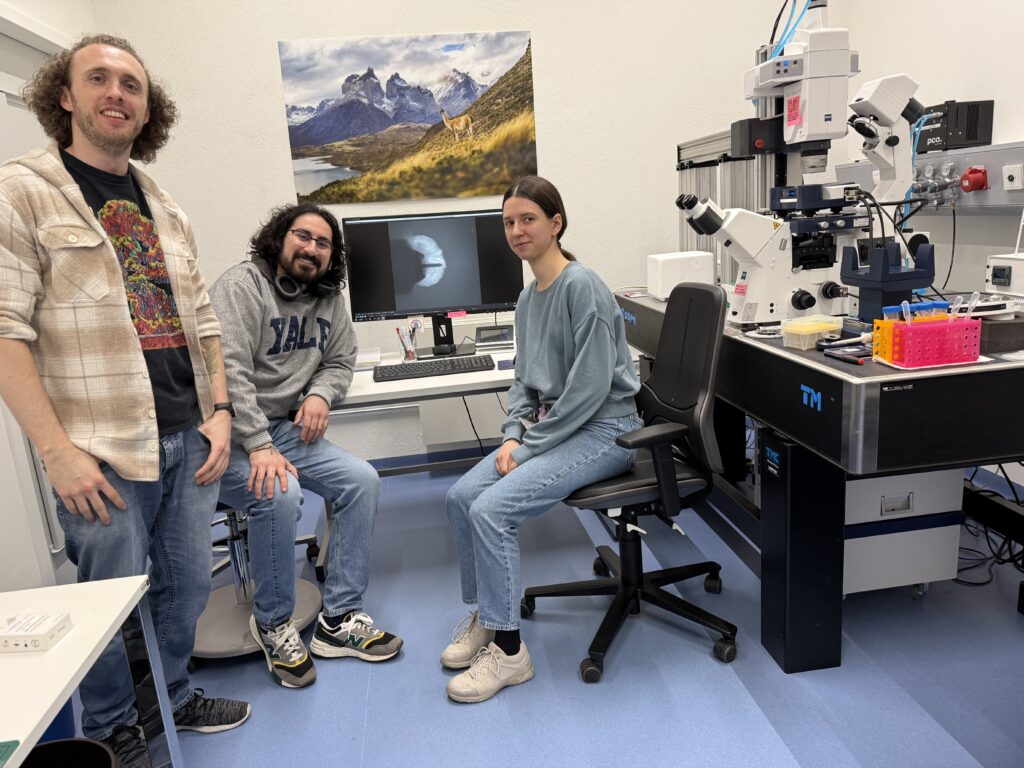
In April, a Lab Shadowing brought together Michael Tranchina, Sebastián Vásquez Sepúlveda, and Maria Tarczewska (Projects A04, A05, and B02) to explore how mechanical cues influence the development of human brain organoids.
To study this, the team embedded organoids in hydrogels with defined stiffness, creating controlled mechanical environments during growth. This setup allows the developing tissue to experience different physical conditions in a highly reproducible way.
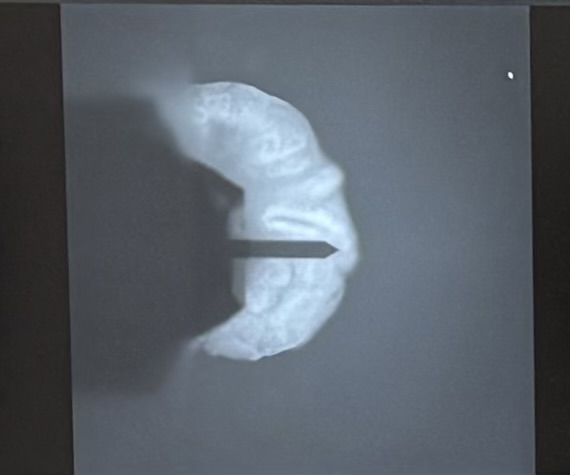
Using atomic force microscopy (AFM) on vibratome-cut tissue sections, the researchers measured the mechanical properties of stem-cell-rich and neuron-rich regions within individual organoids. This approach enables the resolution of compartment-specific mechanics at high spatial resolution.
The collaboration focuses on two central questions: whether these cellular compartments exhibit distinct intrinsic mechanical signatures, and whether changes in the surrounding hydrogel stiffness are reflected in measurable differences within each compartment.
By combining experimental techniques and close collaboration across projects, this Lab Shadowing initiative links external mechanical cues to internal tissue mechanics during early neural development.
Michael Tranchina, A04
 1/2
1/2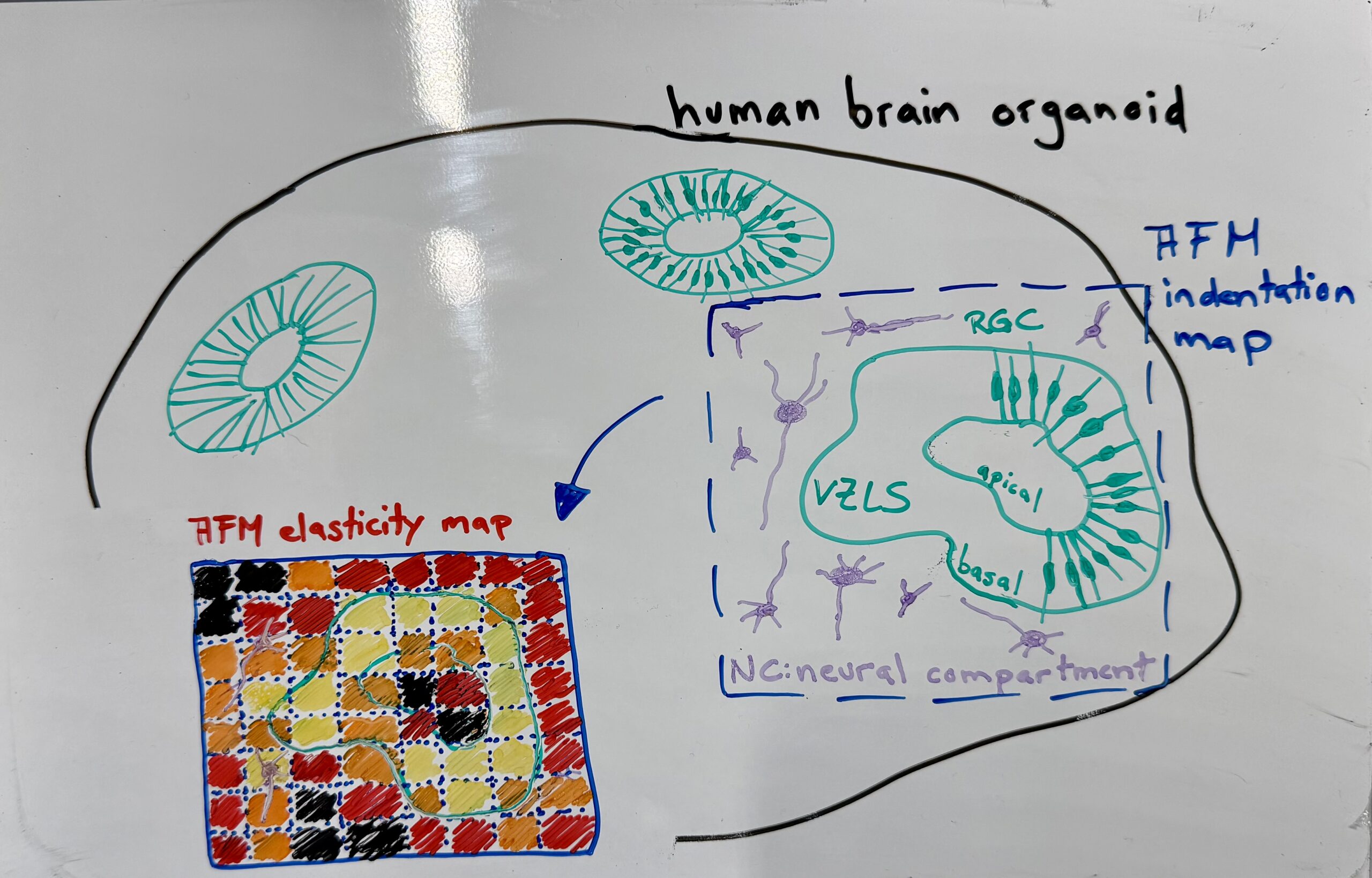 2/2
2/2